Showing posts with label clapper. Show all posts

Wednesday, 24 February 2021

The New Metra Blazer in Scuba!


Pattern - Love Notions Metra Blazer
Skill Level - Intermediate
Fabric - Mid-Weight Scuba from Discovery Fabrics
Skills - marking wrong side, crisp corners, understitching, pressing


The new Metra Blazer from Love Notions looks challenging but it's surprisingly easy.  As usual, there are videos to help you.  Two collar choices offer a shawl collar and a stylish wide one.  The star of the show is the roomy pocket with its clever welt finish - who knew a welt pocket could be so easy!  And the burrito roll method gives you a lovely clean inside front.  It comes with a full bust option for those with a difference of 4" or more between high and full bust measurements and sizes XS to 5X.  What more could you want!

Of course I have to pass along some hints in my blog posts!

When it's hard to figure out which is the right side...

Discovery Fabric's Mid-Weight Scuba is amazing stuff.  It's made in Italy by Borgini and is positively delicious to cut and sew.  My scuba was a colour called Clematis - a lovely royal blue.


My big problem was trying to decide which was the right side since both sides looked the same to me - even under a magnifying glass!  I finally decided to pick one side as the right side and mark the other side with tailor's chalk for consistency.  

Since a lot of the stitchery was going to be with my sewing machine, I did some sample stitching and to my dismay, I got skips!  Okay - I was using a universal needle, so I switched it with a stretch needle and all was fine.

Steam Pressing

Since Discovery's solid colour Mid-Weight Scuba is 80% nylon and 20% elastane, you can't press right on the fabric.  Steam pressing while you're sewing is important so using a pressing cloth and a clapper is the way to go.


First, I steam pressed over a pressing cloth.  The cloth allows me to keep the iron on a little longer and really get the steam down into the fabric.


Then I quickly lift off the iron and pressing cloth, and put on the clapper.  My husband made mine from maple but you can buy them.  They provide a little weight and keep the steam in place, giving you a sharper finish.  With a fabric like scuba, they're invaluable.

Sharp Corners

Something else I was concerned about with scuba was getting a sharp corner on the bottom of the front, but a couple of the testers taught me a clever way to get that.
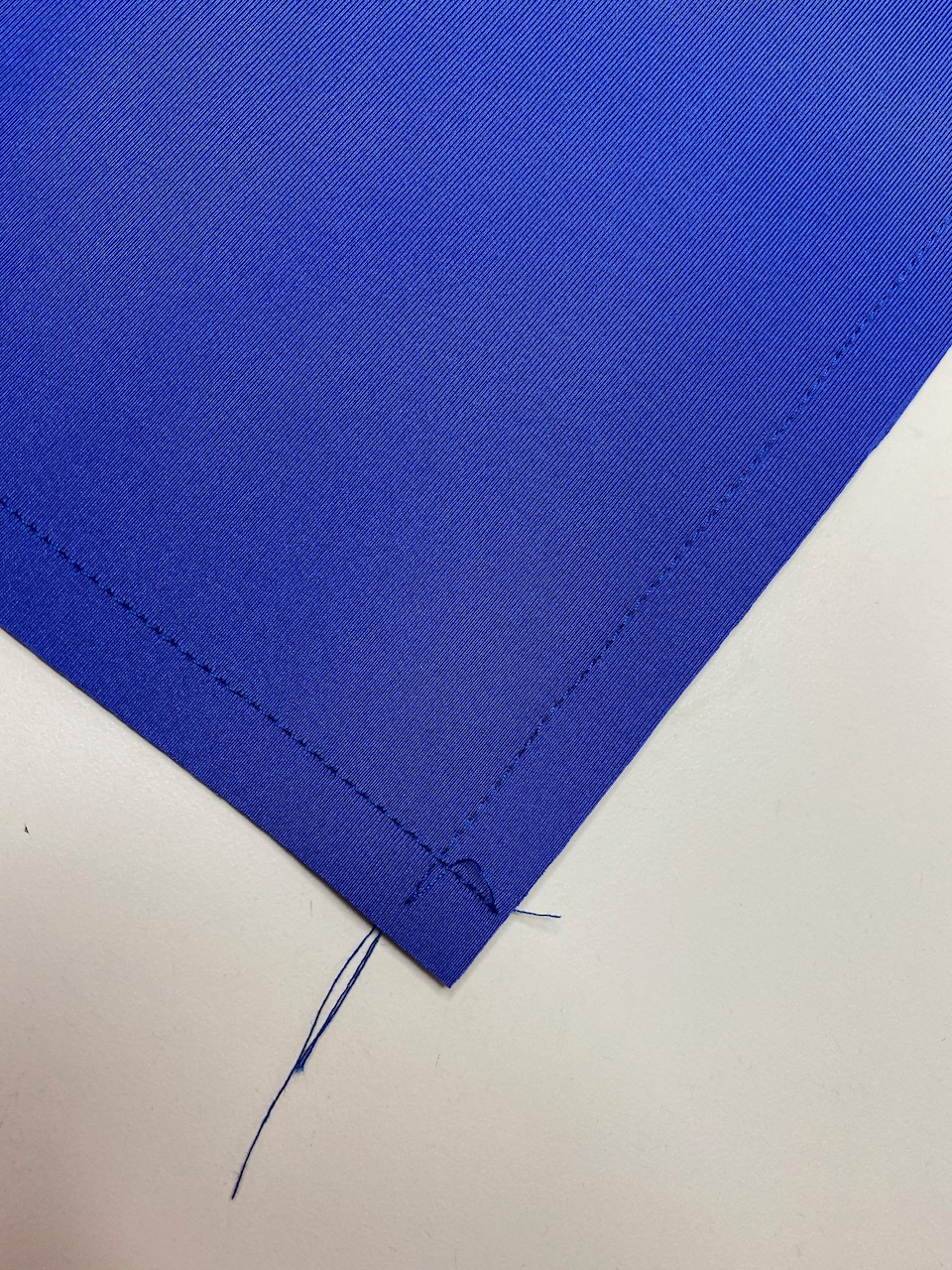

Stitch right past the end - no pivoting - and then start stitching from the other side.


Then clip the corner.


Now the part that gives you the crisp corner.  It's all in how you fold the seams inside.  I turn the garment right side out.  I fold up one seam, and then fold the other on top of the first.  A tiny poke of the corner finishes the process and I have a crisp corner - as soon as I do some understitching!

Understitching

Understitching makes pressing so much easier and when you're dealing with a fabric like scuba, it is such a help!   I wasn't able to get right into the corners or the back of the collar because it was produced by the burrito method, but I understitched where I could.


So what is understitching?  It is attaching the seam to the inside of the garment.  With the Metra Blazer, at the bottom of the front, I stitch the seam to the inside - the lining.  I fold the seam away from the outside and stitch close to the seamline.  

But then when you come to the collar, you have to reverse this because now the lining is showing on the outside.    What understitching does is make pressing so much easier and it makes a seam lie the way you want it to.  So let's take a closer look at the understitching on my Metra Blazer.  You can click on any picture to make it bigger.


With the bottom corner flipped back you can see the understitching - you can't get right to the corner but you can get pretty close.


It continues up to the break for the collar. 


After the break, I have to switch my understitching to the other side so that the stitching is hidden under the collar.


And when everything goes back to the way the Metra Blazer will be worn, the understitching doesn't show, but helps so much in the finish of the garment.  And look at that corner! Now instead of understitching I could have topstitched, but I decided that I preferred my blazer without it.

When I helped test the Metra Blazer, my first version was also made with fabric from Discovery Fabrics.

I used their Yoga Stretch for version one and did the lining and welt in Margarita Pink so that the lining would show on the lapel of the collar and contrast with the dark grey of the rest.  Just another way you can change up your Metra Blazer.

Surprisingly easy to make, the Metra Blazer is an excellent addition to any wardrobe.  Shawl collar or wide collar and lovely big pockets with a professional finish, it's a blazer that you'll love to make and be proud to wear.  You can get your copy through my affiliate link below.

Love Notions Metra Blazer sizes XS to 5X


Sunday, 16 June 2019

Hints for Perfect Collars

Pattern - Love Notions Melody Dolman
Skill Level - Intermediate
Fabric - l'oiseau fabrics - Elise: Seersucker
Skills - stay stitching, pressing, interfacing, using a clapper

Love Notions' newest pattern is a dolman - and what a terrific pattern to have in your collection for cool, comfortable summer wear!  Made with woven apparel fabric, this blouse is actually a fairly quick sew.  The only things which might slow you down are buttons and the collar.  We've talked about buttons before, so this time I'm going to concentrate on the collar.
There's a link to an excellent video right in the pattern's tutorial but I'll toss in a few hints to help make things even easier.  I used a lovely, light cotton/viscose seersucker from l'oiseau fabrics to make mine.

Stay Stitching

The neck opening is stay stitched to prevent it from stretching.  This is especially important if you're using a light fabric - as I did.  I lengthened my stitch from 2.5 to 3.5 and ran the stitching line slightly inside the 3/8" seam allowance.

Interfacing

The collar is interfaced on one collar piece.  Often you will find that after the interfacing has been applied, there is a slight difference between the 2 pieces - the interfaced piece may be slightly smaller than the un-interfaced piece.
If the difference is slight, pin at each collar point and then pin evenly along the outside length of the collar.  There may be slight bulging between the pins and you really don't want tucks on the outside of your collar!
Now take it to your steam iron and press.  This will cause the fabric to contract slightly and now you'll find it's nice and flat.
But we're not out of the woods yet.  You can still get tucks!  When you stitch the collar pieces together, have the interfaced side on top.  This way, the sewing machine's foot can't accidentally push the top fabric and cause a tuck.  The feed dogs pull the under fabric through evenly.

After you've trimmed the seam allowance and turned the collar right side out, it's time to press.  Now I use a handy tool my husband made for me - a clapper.  A clapper is just a block of hardwood that you slap on the fabric after applying steam.  First I press the collar so that the seam line is at the very edge of the piece.  Now to get things really sharp, I use the clapper.
I press with the iron, lift it off and put the clapper on the bit just pressed.  That holds the steam on the fabric and gives me a very sharp edge.  I'm ready to topstitch.  And a clapper is a handy tool to have anywhere you want precise pressing - like with darts or hems.

Stitching on the Collar

One last hint is how I stitch the collar on the bodice.  I usually have the bodice on the bottom and the collar on top.  I do it this way, because my collar is now pretty solid with the interfacing up, while the neck portion of the bodice is less stable so I want it next to the feed dogs.  However, unless you are very careful in your stitching, it's easy to get tucks. 
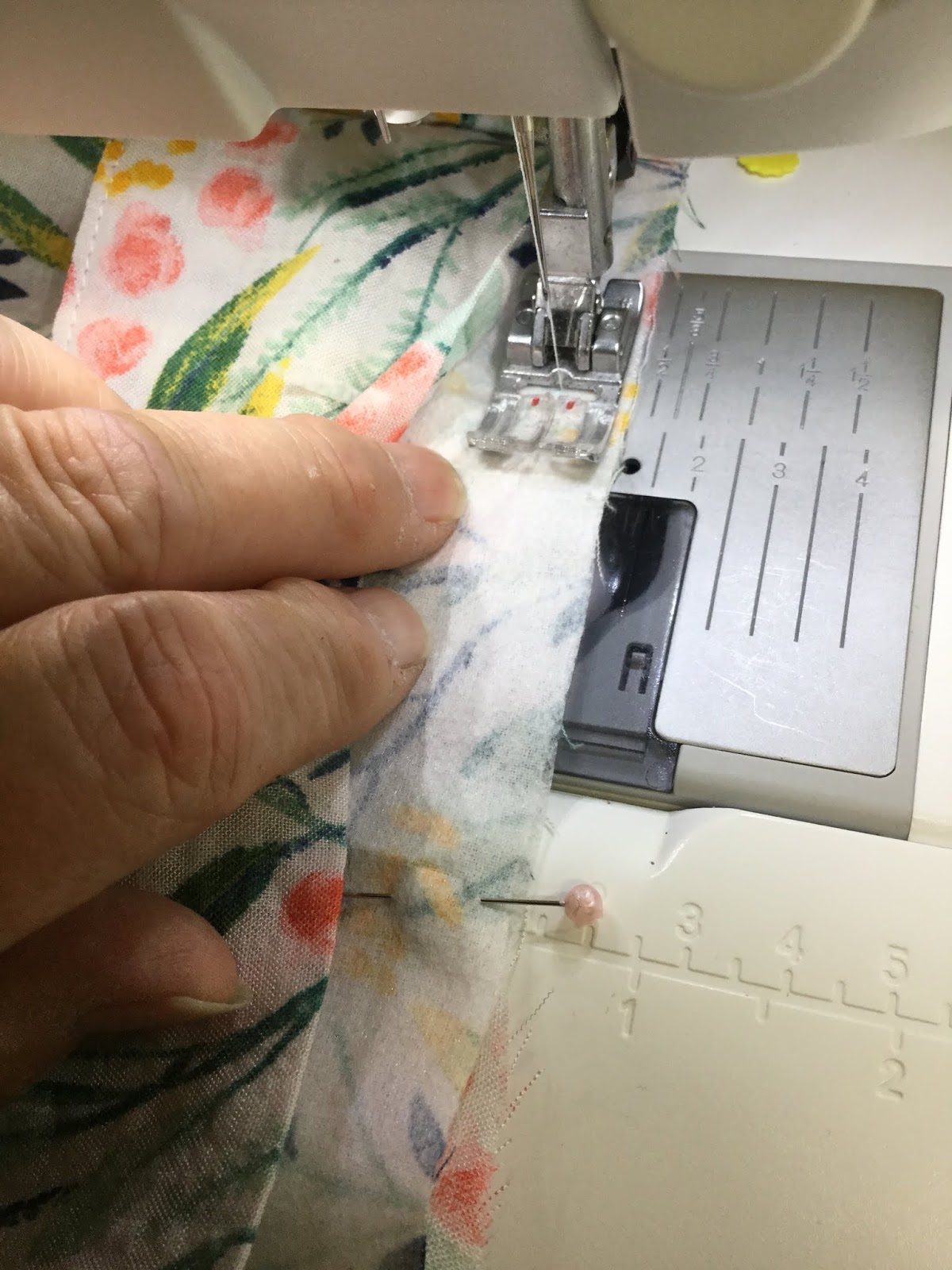
My fingers do the work for me as I slowly stitch the neckline, smoothing the bodice under the collar out of the way and feeling for any possible tucks under the collar with my fingertips as it feeds through.  It's actually a good habit to get into for any sewing or serging.
And now you only have a couple more simple step before you have your collar on - the blouse is nearly finished!  And look at that heart shape!  You can certainly tell it's a Love Notions pattern and it has all the usual hard work and care behind it that we have come to expect!
The Love Notions Melody Dolman is an excellent addition to your summer wardrobe.  You can use a variety of light to medium weight apparel woven fabrics to get just the blouse to make the summer heat more bearable.  You can get the Melody Dolman through my affiliate link below.

Love Notions Melody Dolman